Редакционная заметка
Aibek Samakov Adviser to the National Commission of the Kyrgyz Republic for UNESCO, Cultural Heritage and Humanities Unit, University of Central Asia Among the world’s greatest oral traditions, the Manas epic trilogy of Kyrgyzstan stands as a monumental testament to the endurance of memory, identity, and poetic expression. Consisting of three parts, Manas, Semetei, and Seitek, the trilogy recounts the heroic journey…
MANAS EPIC TRILOGY:
A NATION’S LIVING ARCHIVE
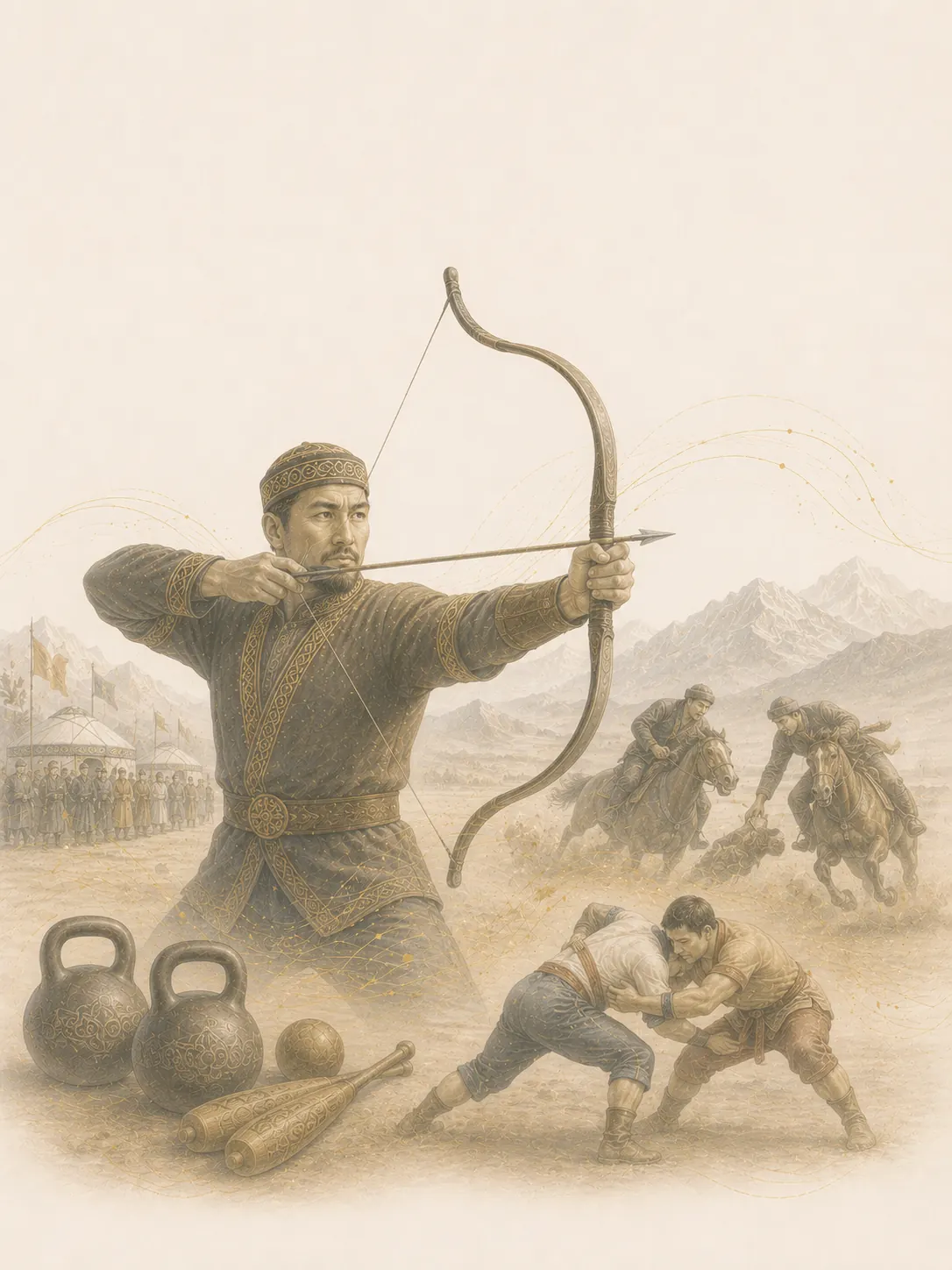
Aibek Samakov Adviser to the National Commission of the Kyrgyz Republic for UNESCO, Cultural Heritage and Humanities Unit, University of Central Asia Among the world’s greatest oral traditions, the Manas epic trilogy of Kyrgyzstan stands as a monumental testament to the endurance of memory, identity, and poetic expression. Consisting of three parts, Manas, Semetei, and Seitek, the trilogy recounts the heroic journey of Manas and his descendants as they fight for the survival, unity, and honor of their people. But beyond its narrative of battles and bravery, the Manas epic is a living Манасчылар, 2018 Дүйнөлүк көчмөндөр оюндары Manaschys, World Nomad Games 2018 гыз байланышкан. Комуз – чулу жыгачтан (көбүнчө өрүктөн) чабылуучу үч кылдуу ас- пап, Кыргызстандын улуттук символу жана түрк музыкалык дүйнөсүнүн ажырагыс бөлүгү. Анын диапазону өтө кенен – ыкчам ыргактан назик гармоникаларга чейин: аттын дүбүртүн, куштун сайраганын же ку- баныч, кайгы жана сыймыктануу сезимде- рин туюнтууга жөндөмдүү. Кыл кыяк – чакан виолончелди эске салган жаалуу аспап. Салмактуу, муӊдуу доошу көбүнчө эпикалык жана рухий маз- мундагы баяндарды коштойт. Ооз комуз менен аткарылуучу күүлөр адамдын аӊ-се- зимине, эмоциясына жагымдуу таасир этип, медитациялык маанай тартуулайт. Кыргыздын маданий мурасы жөнүн- дө сөз болгондо түрк мейкиндигинде- ги жана дүйнөлүк адабияттын эң улуу өкүлдөрүнүн бири Чыңгыз Айтматовдун (1928–2008) атын атабай коюу мүмкүн эмес. Анын “Кылым карытар бир күн” ро- маны, “Жамийла”, “Жаныбарым Гүлсары” жана “Ак кеме” повесттеринде фольклор, философия жана заманбап идеялар ай- калышкан. Бул чыгармаларында Айтма- тов көчмөн элдин азыркы замандагы жа- шоосун, каада-салттарын, адеп-ахлагын, жан дүйнөсүн көркөм иликтеген. Залкар жазуучунун китептеринде түрк мифоло- гиясына, нукура элдик баалуулуктарга не- гизделген адеп-ахлак дилеммалары жана адамзаттын түбөлүктүү суроолору камтыл- ган. Айтматов түрк окурмандарын бирик- тирип, алардын жалпы башатын, руханий изденүүлөрүн эске салуучу адабий тилди жараткан. Кыргызстандагы талаалар менен то- олор – бул жөн географиялык эмес, ма- даний дагы мейкиндик. Бул жакта ырлар ырдалат, ажайып баяндар айтылат, сырдуу символдор жана рухий касиет жашайт. “Манастагы” алп саптардан комуз ыргагы- на чейин, боз үй тегерек-айланаларынан курак геометриясына чейин камтылган өнөр чөйрөсүндө кыргыз эли өзүнүн табе- рик мурастарын сактап эле калбастан, аны менен жашап, жайылтып, келечек өнүгүү багытын да ушул мурастарга таянуу менен аныктайт. ancient Turkic beliefs about the symbolism of metals and stones. The Sound of the Mountains: Music and Literature Music in Kyrgyz culture is inseparable from storytelling, spirituality, and emotion. The komuz, a three-stringed lute carved from a single piece of (apricot) wood, is the national instrument of Kyrgyzstan and a beloved symbol of the Turkic musical world. Its melodic range, from galloping rhythms to delicate harmonics, can evoke the sound of horses, birds, or feelings of joy, grief, and pride. The kyl kiyak, a bowed string instrument akin to a nomadic cello, is revered for its deep, mournful timbre and is often used in spiritual and epic performances. The ooz komuz (jaw harp) creates hypnotic overtones that reflect ancient shamanic and meditative traditions. No account of Kyrgyz cultural heritage is complete without mentioning Chyngyz Aitmatov (1928–2008), one of the most profound literary figures in the Turkic and global literary canon. Writing in both Russian and Kyrgyz, Aitmatov’s novels such as The Day Lasts More Than a Hundred Years, Jamila, and The White Ship bridged folklore, philosophy, and contemporary thought. Through his stories, Aitmatov explored themes of identity, tradition, morality, and the soul of the nomad in the face of modernity. His works often carry Turkic mythological references, moral dilemmas rooted in communal values, and timeless human questions. He united Turkic readers with a literary language that resonated across borders, reminding them of their shared origins and spiritual quests. Kyrgyzstans valleys and mountains are not only physical landscapes but cultural ones too. They are layered with song, story, symbol, and spirit. From the verses of Manas to the rhythms of komuz, from the circle of the yurt to the geometry of Kurak, Kyrgyz people are not merely preserving their heritage. They are living it, sharing it, and using their heritage to shape their future. туруу жана адилеттүүлүктү орнотуу үчүн ар башка урууларды бириктирген баа- тыр Манас жөнүндө айтылат. Көптөгөн со- гуштар, салгылашуулар, ыйык күчтөрдүн кийлигишүүсү жана оор сыноолор туура- луу баяндалат. Манас – жөн эле жоокер эмес; ал элдик эрктин, эрдиктин жана жан аябастыктын символу. Анын ишин уулу Се- метейдин, кийин небереси Сейтек улантат, алардын ар бири улуу көчтү баштап, элди эркиндик үчүн күрөшкө бириктирет. Үчил- тик жалпысынан кыргыз тарыхый тагды- рын, элдин туруктуу баалуулуктарын көп тараптуу чагылдырган дастанды түзөт [2]. Эпос мифке, поэтикалык фантазияга негизделгени менен, кыргыз элинин таг- дырындагы тарыхый бурулуштарды да чагылдырат. Окумуштуулар жана мана- счылар эпосто чыныгы болгон окуялар, түрк жана ар кайсы көчмөн маданиятта- рынын коомдук түзүлүштөр жана саясий өзгөрүүлөр жуурулуштура айтыларын белгилешет. Ошентип, “Манас” маданий түш жана тарыхый күзгү болуп саналат. Ба- атырлар биригип, душманга каршы согу- шат, жай таш салып, аба ырайын өзгөртөт [3] жана көчмөн коомдогу эл башкаруу өнөрүн өздөштүрүп, дипломатияга каты- шат. Эпосто миңдеген географиялык ай- мактар, тоолор, дарыялар, чөлдөр жана та- лаалар сүрөттөлгөн, бул жер таануу менен эл таануунун ыйык маанисин туюнтат. Эпостун руханий чек-ченеми өзгөчө те- рең. Манас дүйнөсүндө арбактар, аян бел- гилер жана касиеттүү күчтөр менен каты- шат. Диний жөрөлгөлөр, ата-бабалардын арбактарын сыйлоо жана космологиялык ишенимдер өзөктүү баян менен шайкеш айкалышкан [4]. Манас аян түштөрдү эске алат, акыйкат мүдөө менен кайраты артат, аны ата-бабалардын арбагы колдойт [5]. Ошентип, бул үчилтикте көчмөндөрдүн диний-философиялык дүйнө таанымы сак- талып калган: бул – көзгө көрүнгөн жана көрүнбөгөн, жандуу жана жансыз, жерде- ги жана космостогу мейкиндик дайыма байланышта болгон дүйнө. Бул элемент- тер бүгүнкү күндө дагы кыргыздардын ру- ханий жана адеп-ахлактык турмушун ка- лыптандырып келет. Оозеки адабияттын өзгөчө туундусу катары “Манас” эпосу да – Сөз өнөрүнүн divine interventions, and moral challenges. Manas is not merely a warrior; he is a symbol of collective will, courage, and sacrifice. His story is followed by that of his son, Semetei, and then his grandson, Seitek, each of whom carries forward the legacy of leadership, struggle, and spiritual strength. Together, the trilogy forms a multi-generational saga that captures the rhythms of Kyrgyz history and the enduring values of its people [2]. Although rooted in myth and poetic imagination, the Manas epic also reflects historical realities of the Kyrgyz people. Scholars and manaschy alike have long noted that the epic weaves together fragments of actual events, social structures, and political dynamics from various Turkic and nomadic cultures. In this way, Manas is both a cultural dreamscape and a historical mirror. Its heroes make alliances, wage wars, manipulate weather through rituals (known as jaichylyk) [3], and engage in diplomacy, reflecting a sophisticated understanding of leadership in nomadic societies. The epic contains the descriptions of thousands of geographic places and landscapes such as rivers, mountains, desserts, and steppe plains, which evoke not only geographic familiarity but sacred connection to the land. The spiritual dimension of the epic is especially profound. The world of Manas is animated by spirits, omens, and divine forces. Religious practices, reverence for ancestors spirits, and cosmological beliefs are seamlessly interwoven into the narrative fabric [4]. Manas is guided by prophetic dreams, protected by ancestral spirits, and empowered by his righteous cause [5]. The trilogy thus preserves the religious and philosophical worldview of the Turkic nomads: a world where the visible and invisible, the living and the dead, the earthly and the cosmic are in constant relationship. These elements continue to shape Kyrgyz spiritual and moral life today. As a form of oral literature, the Manas epic is also a celebration of language. The power of a manaschy lies not only in memorization but in improvisation infusing ancient lines with contemporary resonance, adapting the epic to different audiences and moments. рок “Манас” – согуштар, салгылашуулар жөнүндөгү баян эле эмес, ал өзгөчө таа- сирдүү маданий архив: ата-бабалардын тарыхы, адептик системасы, космологиясы жана муундан муунга оозеки мурасталып келген билим казынасы да болуп саналат. Бул жөн эле баян эмес, ырда камтылган дүйнө тааным дагы. Жүз миңдеген ыр саптарынан турган, көлөмү боюнча “Илиада” же “Махабхарата” сыяктуу эпостордон да бир топ чоӊдук кыл- ган “”Манас” – кыргыз оозеки адабияты- нын жүрөгү. Кылымдар бою аны манасчы- лар – залкар жомокчулар айтып келишкен, алар эпосту жазма тексттерден эмес, эс тутумдан, эргүүдөн жана рухий дарамет- тен алып үйрөнүшөт, аткарышат. Манасчы- лык салты – бир гана өнөр эмес, көбүнчө өзгөчө касиет, кут даарыган шык-жөндөм. Көптөгөн манасчылар өздөрүнүн бул бий- ик дүйнөгө аралашуусун эпостогу бааты- рларды же Манастын өзүн көргөн аян ме- нен байланыштырышат. Бул аяндар эпос жөн эле кайталап айтылбастан, ата-баба- лардан калган ыйык баян катары кабыл алынарын тастыктайт [1]. Үчилтиктин биринчи жана негизги бөлүгүндө тышкы баскынчыларга каршы cultural archive: a repository of Kyrgyz history, ethics, cosmology, and ancestral knowledge transmitted orally through generations. It is not merely a story told, but a worldview sung into being. Spanning hundreds of thousands of lines of verse, far exceeding in length even epics like the Iliad or Mahabharata, Manas is the heart of Kyrgyz oral literature. For centuries, it has been recited by manaschy, epic storytellers who learn and perform the tale not through written texts but through memory, inspiration, and spiritual connection. The manaschy tradition is not only a performance. It is a vocation, often believed to be divinely chosen. Many manaschy describe being called to the role through dreams or visions in which characters from the Manas epic or Manas himself appear to them. These experiences affirm that the epic is not simply recited, but received, as it is considered to be a sacred narration passed from the realm of ancestors to the voice of the living [1]. The first and foundational part of the trilogy centers on Manas, a warrior-leader who unites disparate tribes to resist foreign invaders and establish justice. The story unfolds through a series of epic confrontations, Манасчы - Manaschy What makes Manas particularly powerful as intangible heritage is its capacity to adapt while remaining anchored in tradition. As society changes, new generations of manaschy emerge trained through traditional master and apprentice system. Some performances are held in homes, others in public squares, classrooms, and concert halls. Whether recited by a seasoned manaschy in a yurt or by a young performer at an urban cultural center, the spirit of Manas continues to resonate. It speaks to what is most enduring in Kyrgyz life: the strength of the spoken word, the depth of memory, and the hope carried in song. In a world where many oral traditions face the threat of disappearance, Manas endures. It lives not because it is preserved in books or statues, but because it is spoken, heard, and felt. It reminds us that cultural heritage is not only about the past, it is about how we choose to carry our stories forward, to shape our values, and to imagine our future. The Manas epic trilogy remains, in every sense, a nation’s living archive, a voice that echoes across generations, guiding, inspiring, and uniting those who listen. “Манастын” өзөктүү идеялары мектеп программаларына адабий чыгарма ката- ры эле эмес, адеп, тил жана улуттук тарых- ты окутуунун булагы катары да камтылууда. Жаштар эпосту окуу, аткаруу жана жаӊыча чечмелөө менен үйрөнүп жатышат. Азыр- кы сүрөтчүлөр жана акындар “Манастан” чыгармачыл дем-күч, эргүү алып, анын ка- армандарынын тагдырынан символика- луу, метафоралуу идеяларды табышат [7]. Бейзаттык мурас катары “Манастын” өзгөчөлүгү анын салттуу өзөгүн сактоо ме- нен бирге жаӊыланып туруу дараметинде. Коом өзгөргөн сайын жаӊыча айткан ма- насчылар чыгып, жаштарды устат-шакирт сабактарында үйрөтүп жатышат. Кээ бир манасчылар үйдө, башкалары – аянттарда, мектептерде жана концерттик залдарда айтат. Дасыккан манасчы боз үйдө же жаш аткаруучу шаардын маданий борборунда айтабы, кандай гана болсо да, манастын руху жаңырып турат. Ал кыргыздын жашо- осундагы эң башкы дөөлөт Сөз кудурети, андагы эс тутумдун тереңдиги, үмүт эке- нин сездирип турат. Көптөгөн оозеки салттар жок болуп кетүү коркунучуна кабылган азыркы до- ордо “Манас” жашай берет. Ал китеп бо- луп жазылып же айкел болуп тургузул- ганы үчүн эмес, айтылып, угулуп, өзгөчө таасирдүү деми сезилип турганы үчүн жашоосун улантууда. Эпос бизге маданий мурас – бул өткөн доорлордун эстелиги эле эмес, тарыхыбызды кантип унутпай, баалуулуктарыбызды кантип калыптанды- рып, келечегибизди кандай элестетүү ке- ректигин эске салып турат. “Манас” үчил- тиги толук мааниси менен алганда улуттун улам жаӊыланып туруучу архиви, муун- дан-муунга уланып, угуучуларды бийик мүдөөгө баштаган, шыктандырып, бирик- тирген сырдуу доош болуп кала бермекчи. эӊ бийик үлгүсү. Манасчынын күчү сан- сыз саптарды жатка билгенинде эле эмес, аларды угармандардын курамына, даяр- дык деӊгээлине жараша ылайыкташтыра жаӊыртып айтканында. Эпостун ар бир айтылышы уникалдуу, манасчынын өздүгү, окуя жана баяндамачы менен угуучулар- дын ортосундагы эмоциялык карым-ка- тыш менен түзүлөт. Манасчы окуянын та- асирдүүлүгүн, элестүүлүгүн арттыруу үчүн ритмди доошун, ыргагын өзгөртүп, жаң- соо, ишараттарды колдонот [6]. Ошентип, бул эпос катып калган артефакт эмес, ди- намикалуу, тынымсыз өнүгүп туруучу жана эмоциялык жактан да таасири күчтүү салт бойдон жашап жатат. Көптөгөн кыргыздар үчүн “Манас” – улуттук сыймыктын жана маданий би- римдиктин башаты. Эпос айрыкча ко- лонизация, репрессия же ааламдашуу мезгилинде өзөктүү нукту сактап калуунун ишеничтүү тиреги боло келген. Совет до- орунда диний жана улутчулдук өңүттөн расмий каралоолорго карабастан, эпосту карыялар унутпай, элеттеги мааракелер- де айттырып келишкен. Кыргызстан эге- мендикке ээ болгондон кийин “Манас” кайрадан улуттун тарыхый тектүүлүгүнүн жана маданий туруктуулугунун маанилүү символу катары таанылды. 2012-жылы ЮНЕСКО “Манас”, “Семетей” жана “Сейтек” үчилтигин адамзаттын бейзаттык маданий мурастар тизмесине киргизип, анын дүй- нөлүк маанисин жана адам күчүн тастык- тады. Бирок “Манас” айтуучулар чөйрөсү ме- нен эле чектелбейт. Анын таасири Кыргы- зстандын маданий турмушунан: адабият- тан, музыкадан, көркөм сүрөт өнөрүнөн, билим берүүдөн, атүгүл саясаттан да бай- калат. Манастын аты көчөлөргө, мектептер- ге ыйгарылып, эстеликтер тургузулуп, бал- дарга эпостогу каармандардын ысымдары коюлуп жатат. Андан да маанилүүсү, “Мана- стагы” адилеттүүлүк, меймандостук, берил- гендик жана кайраттуулук сыяктуу баалуу- луктар күнүмдүк турмушка да таасир этип, социалдык ченемдерди калыптандырууну улантууда. Манас баяны майрамдарда гана эмес, каатчылык убагында да ата-бабалар- дын жамааттык күчүн бекемдеп, акылман- дыгын ойготуучу касиет катары айтылат. Each performance is unique, shaped by the personality of the storyteller, the occasion, and the emotional currents between speaker and listeners. The manaschy uses rhythm, voice modulation, gesture, and facial expressions to bring the tale to life [6]. In this way, the epic remains dynamic, ever-evolving, and emotionally immediate, a living tradition rather than a static artifact. For many Kyrgyz people, Manas is a source of national pride and cultural unity. It has been a means of asserting identity, especially in periods of colonization, repression, or globalization. During the Soviet era, for example, despite official suspicions of its religious and nationalist undertones, the Manas epic was kept alive by community elders and recited in rural gatherings. Following Kyrgyzstan’s independence, the epic was reclaimed as a vital symbol of the nation’s historical depth and cultural resilience. In 2012, UNESCO recognized the Manas, Semetei, and Seitek trilogy as part of the Intangible Cultural Heritage of Humanity, affirming its global significance and living vitality. Yet Manas is not confined to the realm of performance. Its influence can be seen across Kyrgyz cultural life including literature, music, visual arts, education, and even politics. Streets and schools are named after Manas, monuments are erected in his honor, and children are named after characters from the Manas epic. More importantly, the values articulated in the epic such as justice, hospitality, loyalty, and courage continue to inform daily life and social expectations. The tale of Manas is invoked not only in times of celebration but also in moments of crisis, as a reminder of collective strength and ancestral wisdom. Educational institutions have integrated Manas into school curricula, not only as literature but as a tool for teaching ethics, language, and national history. Young people are encouraged to explore the epic through reading, performance, and creative reinterpretation. Meanwhile, contemporary artists and poets draw inspiration from Manas, finding in its rhythms a wellspring of creative energy and in its figures a constellation of symbolic meanings [7]. The name “Kök-Börü ” translates literally to “blue” or “grey wolf,” a sacred animal in Turkic mythology [10]. The wolf is revered as a protector, guide, and symbol of strength, endurance, and leadership. In the epic trilogy Manas [11], the wolf appears as a guardian spirit, and in legends about Oghuz Khan, the legendary ancestor of Turkic peoples, it acts as a celestial guide. This mythological connection is not incidental. Among many Turkic communities, the wolf is believed to embody divine wisdom and communal values such as loyalty, strategy, and courage. These attributes are also central to Kök-Börü , a game that was historically performed as a ritualized imitation of a wolf pack’s hunting behavior. According to oral traditions from the Altai region, young horsemen would simulate the actions of wolves, building tactical coordination, endurance, and group solidarity skills vital for both survival and leadership. While there are various accounts of Kök- Börü ’s origins, many agree that it began as a ceremonial or martial practice. One widely cited oral tradition suggests that the game emerged from a ritual hunt: when wolves attacked livestock in mountain pastures, Kyrgyz herders would pursue, kill, and throw their carcasses between each other on horseback: possibly as a way to both subdue the threat and pay homage to the animal’s spiritual power. Over time, this ritual evolved into a competitive game, where the wolf’s body was replaced with a headless goat carcass and the practice came to be known as ulak tartysh. In its earliest forms, Kök- Börü was closely tied to rites of passage and communal celebrations. It was played during seasonal migrations, weddings, and even funerals. Its performative and symbolic character reinforced shared values, spiritual beliefs, and social cohesion. The game also served a vital role in the military preparation of nomadic youth. Its physical intensity demanded great strength, agility, and tactical awareness and mirrored the conditions of battle. Through Kök-Börü , young men honed their horsemanship, built resilience, and learned how to cooperate and lead. Holding on to the goat carcass against opponents symbolized protecting one’s иденттүүлүк аркылуу жакындаштырган кыргыздардын бейзаттык маданий му- расынын эң көрүнүктүү формаларынын бири бойдон калууда [9]. Көк бөрү оюнунун аталышы түрк мифологиясындагы ыйык жаныбарга байланышкан [10]. Көк жал бөрү – баа- тырдын жандоочусу, колдоочусу, жол көрсөтүүчүсү, ал кажыбас кайраттын, өжөрлүктүн жана лидерликтин символу катары белгилүү. Көк бөрү “Манаста” ай- тылат [11], ал эми түрк элдеринин түпкү атасы Огуз хан жөнүндөгү уламыштарда бөрү көктөгү жол көрсөтүүчү топ жылдыз катары көрүнөт. Бул мифологиялык бай- ланыштын мааниси чоӊ. Көпчүлүк түрк элдеринде бөрү бейнеси теӊирден ыро- олонгон акылмандык жана берилгендик, стратегиялык ой жүгүртүү жана кайрат- туулук сыяктуу эзелки баалуулуктарды камтыйт. Бул сапаттар бөрүлөрдүн үйүрү менен ууга чыккандагы жүрүм-турумун чагылдырган көк бөрү оюнунун өзөгүн түзөт. Мисалы, алтайдын уламыштарын- да жаш чабандестер бөрүлөрдү туурап машыгып, жашоодогу жана лидерлик кылуудагы өтө маанилүү тактикалык коор- динация, чыдамкайлык жана биримдик жөндөмдөрүн өрчүтүшкөн. Көк бөрү оюнунун келип чыгышы бо- юнча бир нече божомолдор бар болсо да, анын жөрөлгө же жоокердик машыгууга тиешеси тууралуу ойго көпчүлүк адистер кошулат. Эң кеңири тараган уламыштар- дын бирине ылайык, бул оюн аңчылыкка чыгар алдындагы жөрөлгөдөн башталган тан келип чыккан. Жайыттагы малга кол салган карышкырды атчан жигиттер кууп жетип өлтүрүп, талашып, бири-бирине ыргытып ойногон. Мунун бир мааниси – коркунучту жоюу, дагы бир мааниси жырткычтын касиетине ээ болуу араке- ти деп чечмелегендер бар. Мезгил өткөн сайын бул жөрөлгө жаатташа мелдешкен оюнга айланып, карышкырдын ордуна мууздалып, башы кесилген, ичеги-карды алып салынган текенин тулкусун тартып калышкан да, улак тартыш деп да ата- ла баштаган. Алгачкы түрүндө көк бөрү оюну көчүп-конуу, той, аш берүү ж.б. учу- рундагы жөрөлгөлөр менен тыгыз байла- нышта болгон. Анын символикалык жана
КӨК БӨРҮ:
КӨЧМӨН РУХТУН
КӨӨНӨРГҮС ТАБЕРИГИ
Чолпонай Усубалиева-Грищук “Айгине” маданий изилдөө борбору Көк бөрү – жөн гана салттуу ат спорту эмес. Бул кыргыз элинин муундан муун- га уланып келген көчмөн рухунун күч менен тездикти, кайрат менен шамда- гайлыкты бириктирген бүгүнкү деми [8]. Муундан-муунга өтүп келген көк бөрү оюнунун түпкү башаты Борбор Азияда- гы малчылык менен тиричилик кылган калктын коомдук түзүлүшүн, жоокердик демин жана көк теӊирге сыйынган кос- мологиясын чагылдырган көп кылымдык үрп-адаттарга байланышкан. Бүгүнкү күн- дө ал жергиликтүү жамааттарды бирик- тирип, түрк элдерин жалпы салттар жана